
Route Report: Dopey Duck 5.9 Shortoff Mountain
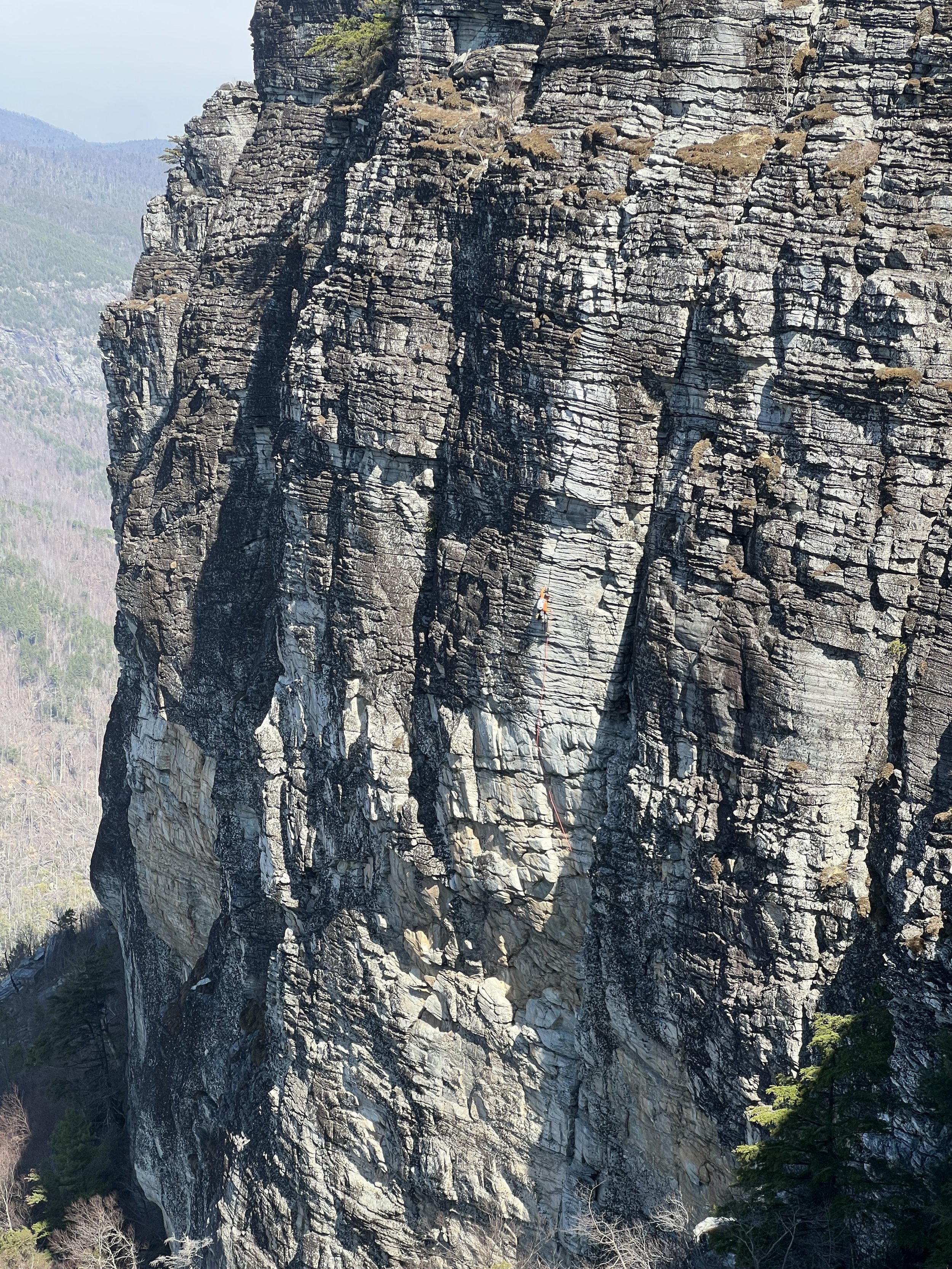
A climber enjoying the stellar pitch 2 of Dope Duck.
Dopey Duck is an absolute SUPER CLASSIC multipitch rock climb in North Carolina. Located in the wilderness of Linville Gorge on Shortoff Mountain. It’s a 3 pitch route that offers clean rock, steep climbing, and views of the Linville Gorge and Lake James area.
As mentioned Shortoff Mountain is located in the Linville Gorge wilderness and its a quite complex area to approach and ascend out of. There are no official trails at the bottom of Shortoff Mountain and accessing the base of the climbs involves a technical descent down the approach gully. The approach gully starts easy enough with some steep but manageable 2nd and 3rd class terrain. The gully usually has some water running in it in all but the driest seasons. Once at the bottom you have a few choices on how to negotiate the last steepest scetion. There is a textile anchor on a large tree that most people will opt for. A single 60 meter rope will just barely get you to the floor. The other option involves scrambling down some 4th class terrain skiers left of the rappel tree where there is usually a fixed rope that you can hand over hand.
Once at the base of the gully walk North, or upriver. for 150 yards or so until you can round a buttress to the base of the route.

You’ll find a right trending crack and corner system that is actually the first pitch of Toxic Shock, 5.9. Most climbing parties opt for this pitch instead of the original first pitch of Dopey Duck. The original first pitch of Dopey is 5.7 and is located a bit further to the right of Toxic Shock. It’s a good pitch in itself, but at a slightly lesser grade.
The first pitch as described (Toxic Shock) is a challenge right from the ground. Reaching up to get started the holds are startling to cold fingers if this is the first route of the day. Balancing upward on lead and placing gear requires thoughtful balance. Don’t miss an opportunity to place protection when presented. There are some section in the first 50 feet that could lead to a dangerous runout if you miss a placement. After about halfway the climbing eases a bit and becomes a bit more rompy up the broken crack system until you are about half rope mark. There should be an obvious but small ledge on the right side of the crack to build a natural belay with trad gear. I forgot to mention there aren’t really any bolted anchors anywhere on Shortoff. A feature of the wilderness trad ethic that continues to be preserved by modern adventure climbers.
The next pitch is the money. It starts with a left traverse. I usually place some passive pro to get started and along the traverse. The rock is incredible quality. Once at the end of the traverse there’s only one thing left to do. Chalk up and start climbing upward. The wall overhangs slightly by a few degrees and looks like it goes on forever when you're on the bottom of it. As you move up it’s an absolute maze of horizontals. Some of them are good and crisp and some of them are slopey and sap the juice from your forearms. It’s a constant dilemma of trying to find the best hold or moving upward with the marginal one that your hand landed on. All the while continuing to get your feet higher and placing gear in the horizontals.
The climbing in this section is nothing short of incredible! Greenville, SC climbing legend Doc Bayne was quoted as saying, “If Dopey Duck were any more 5.9 then it would be 5.11!” We couldn’t agree more.

As you make your way up the face begins to relent and the angle goes back into a less than vertical angle. There’s still a roof pull above you but the climbing is much more tame after the sprint through the horizontals.
There’s a couple options for setting up the belay and I always opt for the smaller ledge that is right at the top of the vertical climbing. This give me better communication with my partner or guest. There is a higher ledge but it’s really not the best option due to issues that might arise from your follower hanging on the rope.
From the belay its an easy pitch to the trees at the top of the Mountain.
Dopey Duck was first climbed by Tommy Howard and Jim Okel. Since that time it’s been ascended thousands of times as attestested by the clean streak of rock surrounded by lichen on either side. If you want to experience the joy of climbing this route or any other route at Shortoff then reach out. We are happy to climb classics like this over and over and help newer climbers find the joy and freedom that climbs like these offer. The best season for Shortoff is Spring and Fall when high temps are between 60 and 80 degrees.