
Appalachian Climbing School Semester Programs
The key to unlocking true independence as a climber.
Our Semester programs are for more advanced curriculum like traditional lead climbing and rescue skills. Our experience is that students need more experience to retain the complex information presented in these topics.
-

Traditional Lead climbing Semester
$1,750
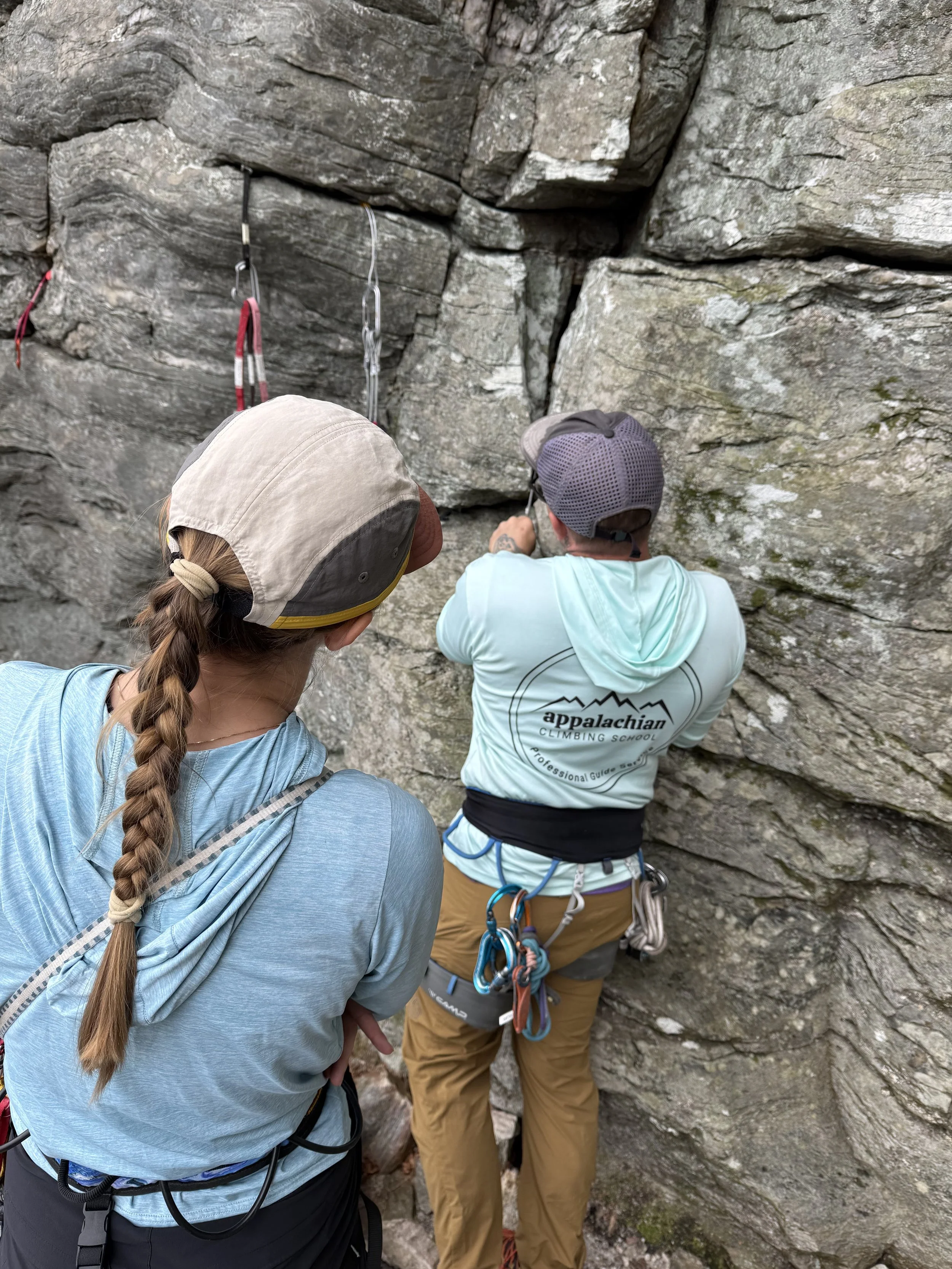
Are you ready to move beyond the gym and the top rope? Appalachian Climbing School’s Traditional Rock Climbing Semester Program is a complete, comprehensive curriculum designed to develop competent, confident, and self-sufficient trad climbers. This program is intentionally structured to take students from foundational skills through leading and multi-pitch climbing in real outdoor environments.
Why Choose Our Trad Semester Program?
This is not a weekend clinic—it’s a semester-long progression that blends theory, focused practice, and real-world application. Our goal is not just to teach systems, but to develop the judgment, efficiency, and “lead head” required for safe and rewarding traditional climbing.
Progressive Structure
The curriculum moves from essential knots and gear selection in the early sessions to complex multi-pitch transitions, problem solving, and scenario-based decision-making later in the program.Blended Learning Model
Students learn through a mix of formats designed to maximize retention and application:Live Online Sessions (6x): Route planning, technical concepts, and the history and ethics of trad climbing
Full-Day Crag Sessions (6x): Focused, hands-on practice with gear placement, anchors, and rope systems. Full-system application in real climbing terrain, including a full-day final assessment
Comprehensive Skill Development
Students build mastery in SERENE/ERNEST anchor principles, passive and active protection, lead strategy, multi-pitch systems, and advanced descent and bail techniques.Program Curriculum & Highlights
Our three-phase structure ensures a solid foundation before advancing to the complexities of leading and multi-pitch climbing.
Phase 1: Foundations and Systems
Introduction to the basic trad rack and protection concepts
Essential climbing knots (figure-8, clove hitch, etc.)
Crag Session 1: Passive protection placement (nuts and hexes)
Anchor building principles, force vectors, and natural anchors
Phase 2: Leading, Anchors, and Transitions
Crag Session 2: Advanced active protection (cams) and multi-point anchors (quad, sliding X)
Lead strategy, route reading, and managing the mental demands of leading
Crag Session 3 (Mid-Program): Single-pitch leading, cleaning, and rappelling efficiency
Introduction to multi-pitch systems and belay station management
Phase 3: Scenario and Refinement
Crag Session 4 Multi-pitch transitions and efficiency (swapping leads)
Descent and bail techniques, including leaving gear and minimizing impact
Crag Session 5 “What if?” scenarios involving gear failure and stuck ropes
Crag Session 6 (Final Assessment): System integration, full-day climbing, and peer evaluation
Ready to become a self-reliant traditional climber?
Enroll in Appalachian Climbing School’s Traditional Rock Climbing Semester Program. Space is limited to 4 students per semester ensuring high-quality instruction. -
Partner and Self Rescue Semester
$1,750
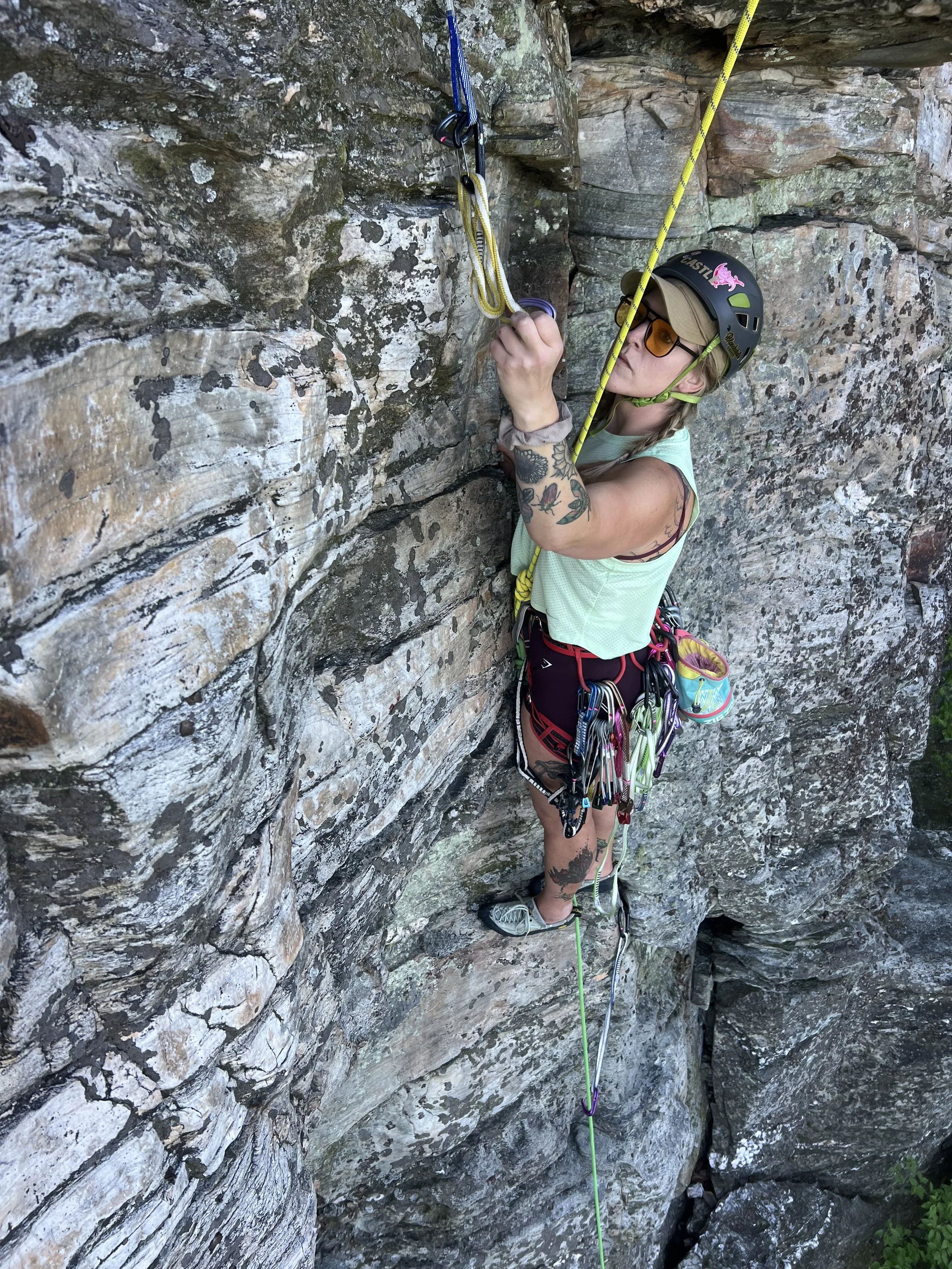
Are you prepared to respond when things don’t go as planned? Appalachian Climbing School’s Climbing Rescue Semester Program is a comprehensive, scenario-driven program designed to build confident, capable climbers who can assess problems, build effective systems, and execute real-world rescues in vertical terrain.
Why Choose Our Rescue Course?
This is not a checklist-based clinic or a one-day hauling demo. This course is a structured progression that emphasizes decision-making, adaptability, and clean execution—the skills that matter when rescues are complex and conditions are less than ideal.
Progressive Structure
Students move from personal rescue fundamentals to partner rescue systems and finally to complex, multi-step scenarios that require thoughtful problem solving and efficient system management.Blended Learning Model
Instruction is delivered through a balance of theory and hands-on practice:Live Online Sessions (6x): Rescue philosophy, system theory, communication, and scenario planning
Full-Day Crag Sessions (6x): Focused, hands-on practice of rescue systems at a local crag. Realistic, full-scenario rescue applications and final assessment
Real-World Focus
Rather than memorizing systems, students learn why systems work, how to adapt them with limited gear, and how to manage transitions under pressure.Program Curriculum & Highlights
The course follows a three-phase structure designed to build strong fundamentals before introducing complex scenarios.
Phase 1: Foundations and Personal Rescue
Rescue mindset, accident causation, and prevention
Essential rescue knots and hitches (prusiks, munter-mule-overhand, friction hitches)
Crag Session: Self-rescue skills, escaping the belay, and controlled lowering systems
Phase 2: Partner Rescue and Mechanical Advantage
Lowering and raising principles
3:1 and 5:1 hauling systems and transitions
Counterbalance rappel theory and application
Crag Session (Mid-Program): Partner rescue implementation in a vertical environment
Phase 3: Scenario-Based Problem Solving
Improvised rescue techniques using minimal gear
Managing injured or unresponsive climbers
Team rescue communication and leadership
Crag Session: “What if?” scenarios and system troubleshooting
Crag Session (Final Assessment): Full-scale rescue scenarios integrating all course skills
Ready to build real rescue competence?
This course is ideal for experienced climbers, aspiring guides, and anyone seeking the confidence to manage emergencies in the vertical environment. Enrollment is limited to maintain high instructional quality.
Program Locations
Both the Traditional Rock Climbing Semester Program and the Climbing Rescue Course are offered concurrently in two premier climbing regions of North Carolina, allowing students to choose the location most convenient to them.
In the Piedmont, instruction takes place at Moore’s Wall, providing accessible terrain ideal for focused skill development, repetition, and controlled learning. In Western North Carolina, sessions are held in the Asheville area, with venues such as Rumbling Bald and Looking Glass, offering classic routes, varied rock features, and real-world terrain well suited for both technical progression and scenario-based training.
By running the same curriculum simultaneously in multiple regions, students can select the location nearest them while receiving the same high standard of instruction, curriculum progression, and instructional philosophy—regardless of venue.
Traditional Rock Climbing Semester
The Zoom sessions for both locations will happen for both locations simultaneously and continuing on a biweekly basis.
Piedmont (Moore’s Wall)
August 22nd
September 5th, 20th, and 26th
October 17th, and 31st
Contingent weather dates:
November 7th and 14th
Western North Carolina
(Asheville Area: Rumbling Bald, Looking Glass)
August 22nd
September 5th and 19th
October 17th, and 31st
November 7th
Contingent weather dates:
November 14th and 21st
partner and Self Rescue Semester
The Zoom sessions for both locations will happen for both locations simultaneously beginning on Tuesday March 17th and continuing on a biweekly basis.
Piedmont (Moore’s Wall)
August 30th
September 13th, and 27th
October 11th, and 25th
November 8th
Contingent weather dates:
November 15th and 22nd
Western North Carolina
(Asheville Area: Rumbling Bald, Looking Glass)
August 30th
September 13th
October 11th, and 25th
November 8th and 15th
Contingent weather dates:
November 22nd
Weather & Schedule Contingency & Policy
All in-person sessions are scheduled with designated weather contingency dates to account for unsafe climbing conditions. If weather or environmental factors prevent instruction on a scheduled date, the session will be moved to the next available contingency date listed for that program and location.
Students should plan to keep contingency dates available when enrolling. Whenever possible, weather-related schedule changes will be communicated in advance.
If you need to break up the payment for this program please reach out to the ACS office to discuss options.
Due to the nature of the program we will not offer rescheduling of dates, unless they are changed for weather.