
Totem Cams. A modern miracle or something else
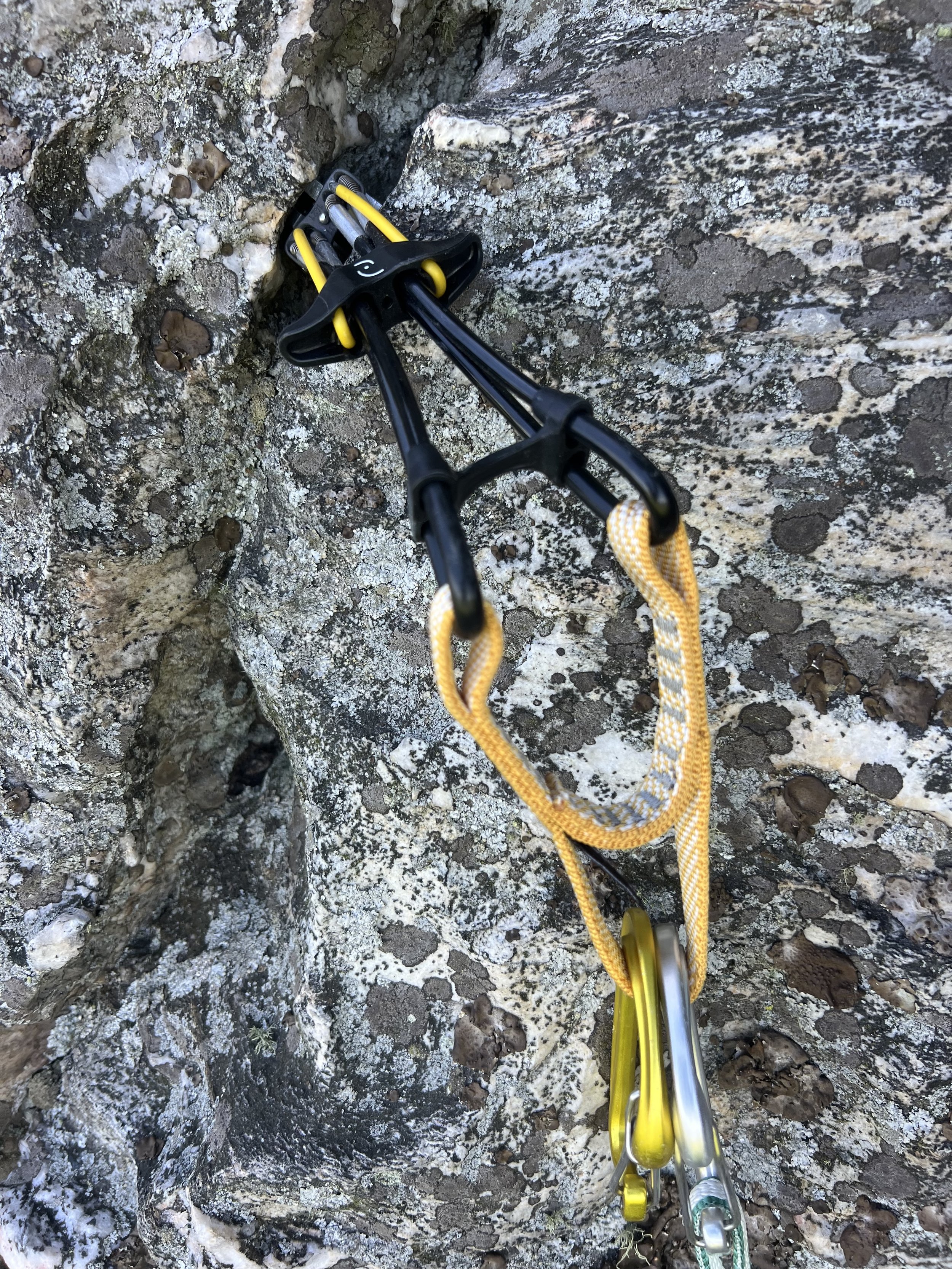
A totem cam in a flaring crack.
In the last decade or so there’s been a new type of camming device that has come to market that has gained a cult like following, the Totem. The design is novel with lots of flexible parts, direct axle loading, and the ability to load both or only one pair of cam lobes. With all that innovation you can see why they are popular, but there’s a downside. They are fragile in certain placements.
Spring loaded camming devices (cams) first came to market in the late 1970’s with the Wild Country Friend. They were an amazing revolution in terms of being able to protect parallel sided cracks in a way that no other piece of protection could offer. That first design included a rigid stem or body made of aluminum with an axle and cam lobes on one end. They were rugged. Coupled with a tie off on a forward hole in the stem they were and still are indestructible for recreational climbing protection.
Other manufacturers began to offer their versions and there have been many iterations on the theme throughout the years. Flexible stems made out of cable. U shaped bodies with funky ring triggers that might deglove your finger if you fell at the wrong time. Cams with tiny lobes for the smallest of cracks. The double axle design that allowed a larger range and so on and so on.
Then came the Totems. They have been heralded as being amazing in Yosemite granite for working in flaring piton scars where nothing else will. They quickly became a favorite for less secure placements. There’s no argument that every individual placement while climbing has a size, style, or brand of protection that works best for that individual placement, but that’s not the issue here. The issue is the design of the cam.
Totems are designed with a novel concept called direct axle loading and what that means is the cables that make up the body of the cam are tied directly to the cam lobes. Because the cam lobes are relatively small the cable also have to be small. Therein lies the design issue, the small cables. When you have the smaller cables there is an issue with durability, they don’t like to be bent in sharp angles. In certain placements on steep climbs there are shallow horizontals that are ideal for a cam to be placed there. When you make that placement with a totem you are asking those small cables to bend sharply over an edge. A worst case scenario.
In online forum after online forum, owners of the fabled Totem have posted pictures of frayed cables and kinked wires after taking falls in exactly these types of placements. If the fall is hard enough, those thin, direct-loading cables can slice right over the rock edge like a knife through butter. They are brilliant engineering marvels, but they are not indestructible.
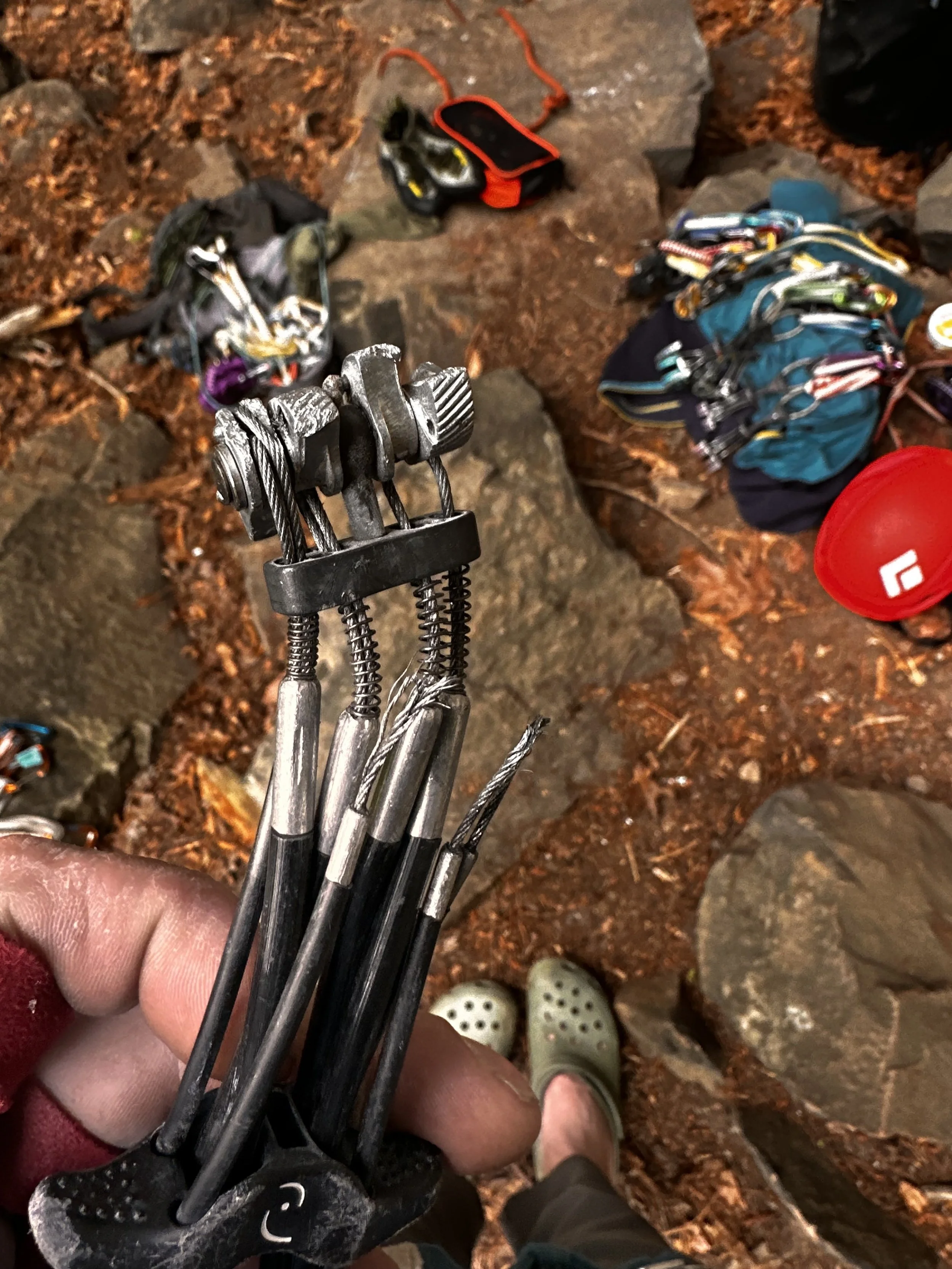
Busted!!
Ironically, to find the best tool for a shallow horizontal with sharp edges, we have to look backward.
Remember those original, rugged Wild Country Friends we talked about earlier? The ones with the solid aluminum bars for stems? It turns out that old-school tech excels right where modern innovation stumbles.
When you plug an old rigid-stem Friend into a shallow horizontal crack and tie it off at the forward hole, it doesn’t just rely on raw camming friction to keep you off the deck. Instead, it utilizes a powerful levering action. As the rope pulls down on the front tie-off, the rigid stem acts as a lever, physically pivoting against the bottom lip of the crack. This mechanical leverage forces the cam lobes upward and outward, mechanically locking the piece into the rock.
While a Totem’s flexible cables are crying under the strain of a sharp edge, a rigid-stem Friend is comfortably in its element, using the physics of a simple lever to provide a bombproof placement.
Innovation is great, and Totems certainly deserve a spot on your rack for those sketchy, flaring pin scars. But next time you’re eyeing a shallow horizontal roof, don't automatically reach for the newest cult-favorite. Sometimes, the 1970s had it right all along

Old tech might be better for certain placements.
We love sharing these stories, but we love sharing the actual rope with you even more. If "The Slimey" or our other adventures have inspired you to get outside, let’s make it happen.
Drop us a line on our contact page to plan your next custom objective, or explore ourguided trips to secure your dates for the upcoming season!